
How to Layout an Outdoor Living Space: 12 Design Principles That Actually Work
Learn how to layout an outdoor living space with proven design principles. Discover zoning strategies, furniture placement tips, and flow solutions that transform patios, decks, and yards into functional outdoor rooms.
BACKYARD IMPROVEMENTS
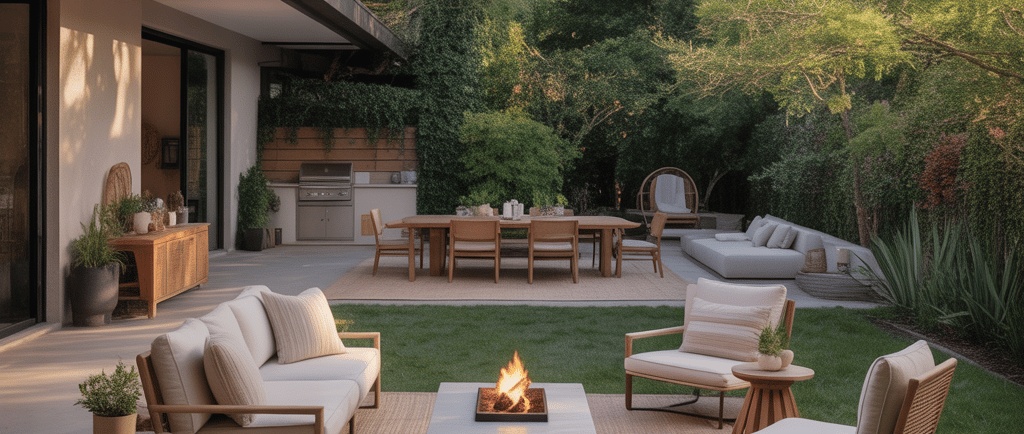
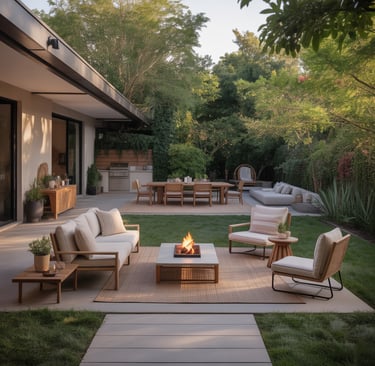
I'll never forget the first time I tried to design my backyard patio. I bought all this gorgeous outdoor furniture, arranged it how I thought looked good, and then... nobody ever sat out there. My family would walk through to get to the yard but never actually hang out in the space I'd created. It was frustrating as hell! Turns out, making an outdoor space look pretty in your head and making it actually functional are two completely different things.
Here's something that blew my mind when I finally figured it out: about 40% of homeowners say they don't use their outdoor spaces as much as they'd like, and poor layout is one of the biggest reasons why. You can have the most expensive furniture and the most beautiful plants, but if the layout doesn't work, people won't use it. Period.
I've spent the last fifteen years designing and redesigning outdoor spaces—my own and helping friends and family with theirs. I've made every mistake in the book. I've blocked pathways with furniture, created "dead zones" that nobody ever walked into, and arranged seating so far apart that you had to shout to have a conversation. Each failure taught me something though, and now I actually know what I'm doing (most of the time, anyway).
In this guide, I'm gonna walk you through the design principles that actually matter when laying out an outdoor living space. Whether you're working with a tiny deck, a sprawling backyard, or something in between, these principles will help you create a space people actually want to use. We'll talk about zoning, traffic flow, furniture placement, and all those little details that separate outdoor spaces that work from ones that just sit there looking pretty but empty. Let's get into it!
Understanding Your Outdoor Living Space Potential
Before you buy a single piece of furniture or move anything around, you gotta really understand what you're working with. I learned this lesson the expensive way after buying furniture that was completely wrong for my space.
Start by assessing your existing outdoor area honestly. Is it a deck, a patio, a yard, or some combination? What's the actual square footage? I grabbed a tape measure and drew my space to scale on graph paper—old school, but it helped me visualize things. You need exact measurements because "eyeballing it" leads to furniture that doesn't fit or awkward gaps everywhere. Measure the length and width of your space, note where doors open, mark any permanent features like built-in planters or steps. This becomes your base map for everything else.
Natural focal points are huge, and a lot of people miss this. Look at what's already there that draws your eye. Do you have a killer view of the mountains or a lake? That's your focal point—don't block it with furniture! Is there a beautiful old tree? That could anchor your whole design. Existing architecture matters too. I had this brick wall on one side of my patio, and instead of ignoring it, I made it a feature by hanging planters and arranging seating to face it. Whatever naturally catches your attention should guide your layout, not be something you have to work around awkwardly.
Traffic patterns were something I completely ignored at first, and it bit me in the ass. People naturally walk certain ways through spaces. Watch how you and your family currently move through your outdoor area. Where do you enter from the house? Where do you walk to get to the yard or garden? These natural pathways need to stay clear—don't put furniture in the way thinking people will just walk around it, because they won't. They'll either avoid your space entirely or they'll bump into your furniture and be annoyed. I had to move my entire seating arrangement once because I'd put it right in the path from the house to the garage, and everyone just walked through the middle of the conversation area!
Sun and shade patterns change everything about how usable your space is. I spent a whole weekend observing my patio at different times. Morning sun hit the east side beautifully—perfect for coffee. Afternoon sun on the west side was brutal from 2-6pm—terrible for sitting. Evening had this gorgeous dappled light under my tree. Once I understood this, I could plan where different activities should go. Dining areas work great in morning or evening sun but not harsh afternoon sun. Lounging areas benefit from shade during the hottest parts of the day. Track your sun patterns for at least a few days across different times before making layout decisions.
Privacy is another assessment factor people forget about. Can your neighbors see directly into your space? Are you visible from the street? There's nothing worse than trying to relax outside while feeling like you're on display. I identified the sightlines that bothered me and noted them on my plan. This helped me figure out where I needed screening—whether with plants, structures, or strategic furniture placement. You don't need to block everything, but knowing where privacy is an issue helps you plan solutions.
Honestly, just spending a week observing your space before changing anything will save you so much frustration. I used to jump right into rearranging, but now I watch how sun moves, where wind comes from, how water drains when it rains, where it's comfortable at different times of day. All this information makes your actual design decisions way easier and more likely to succeed.
The Foundation: Defining Zones for Different Activities
This is probably the single most important design principle for outdoor spaces, and it's where most people go wrong. You gotta think about your outdoor area as multiple "rooms" with different purposes, not just one big undefined space.
Creating distinct areas for different activities is what makes an outdoor space actually functional. You need a dining zone, a lounging zone, maybe a cooking zone, possibly a play area or fire pit zone. These don't need walls between them, but they need to be clearly defined in your layout. I learned this after my first attempt where I just scattered furniture around and nothing felt intentional. Now I literally draw boxes on my plan for each zone before I place any furniture.
The conversation zone is where I start because that's usually the heart of outdoor living. You want seating arranged so people can actually talk to each other comfortably. The key is keeping seats close enough for conversation—about 6 to 8 feet apart maximum. Any farther and people are shouting across space. I arrange seating in a U-shape or L-shape facing each other, not in a straight line like a waiting room. This creates intimacy and encourages interaction. I typically use a sectional or multiple chairs arranged around a central coffee table. The coffee table is crucial—gives people a place for drinks and helps anchor the zone visually.
Outdoor dining areas need more space than you think. I made the mistake of cramming a table into a too-small area, and nobody wanted to sit there because they felt trapped. You need at least 3 feet behind each chair for people to push back and get up comfortably. So if your table is 40 inches wide, the zone needs to be at least 9-10 feet wide to accommodate the table plus chair clearance on both sides. I also learned to position the dining area close to the house (or outdoor kitchen if you have one) so you're not carrying food and dishes across long distances. That gets old real fast.
Cooking and grilling zones require serious planning around safety and function. Your grill needs at least 3 feet of clearance on the operating side—you need room to move around safely when you're cooking. I keep my grill away from high-traffic areas because hot grills and people walking by don't mix well. If you're building an outdoor kitchen, think about the work triangle concept—grill, prep space, and refrigerator should form a triangle with sides between 4-9 feet for efficiency. I also make sure there's counter space on both sides of my grill for setting down hot items and prepping food.
Recreation areas depend on what you like to do. I've got a fire pit zone with Adirondack chairs arranged in a circle, leaving one opening for entry. It's separate from the main seating area because fire pits need their own clearance. If you've got kids, maybe you want a play area with space for lawn games or a play structure. The key is thinking about what activities you actually do and allocating space accordingly. Don't create a game area if you never play games—that space could be used for something you'd actually enjoy.
Transition zones between areas are something I never thought about initially, but they matter. You need visual or physical transitions to help define where one zone ends and another begins. This could be a pathway, a change in flooring material, a planter, or even just a shift in furniture orientation. I use an outdoor rug under my conversation area and a different material under the dining table—this subtle change helps define the zones without needing walls. The transitions also prevent that awkward "where does this area end?" confusion.
Dividing zones in open spaces without actual walls takes creativity. I use furniture placement as the primary divider—the back of a sofa creates a natural boundary. I use large planters to separate the dining area from the lounge area. A pergola over the dining zone creates a "ceiling" that defines that space. Even a change in elevation—a few steps up to a different level—can separate zones effectively. The goal is to make each area feel distinct without making your outdoor space feel chopped up and disconnected.
Traffic Flow and Pathways That Make Sense
Traffic flow is one of those things you don't think about until it's wrong, and then it drives you crazy every single day. Getting this right makes everything else work better.
The 3-foot walkway rule is pretty much gospel for outdoor spaces. Any pathway that people will walk through regularly needs to be at least 36 inches wide—that's 3 feet. This allows two people to pass each other comfortably or one person to walk through carrying something. I violated this rule on my first patio by creating these cute narrow pathways between planters, and it was annoying every single time I had to navigate through there. Main pathways—like from your door to the yard—should actually be 4 feet wide if possible. It feels more generous and accommodating.
Creating clear pathways between zones prevents the awkward shuffle through furniture situation. I make sure there's an obvious route from the house to each zone and between zones. This doesn't mean you need actual paved paths everywhere, but the routes should be clear and not blocked by furniture legs or planters. I often use different materials to indicate pathways—stepping stones, gravel, or even just maintaining a clear line of grass. Visual cues help people intuitively know where to walk.
Avoiding bottlenecks around high-traffic areas is crucial. The area right outside your door is gonna get the most traffic, so don't put furniture or planters right there. I leave at least a 4-5 foot clear zone immediately outside my door. Same goes for areas around stairs—you need clearance for safety and flow. I had a planter at the bottom of my deck stairs once, and I can't tell you how many times people almost tripped over it. Moved it three feet to the left and the problem disappeared.
Connecting indoor and outdoor spaces seamlessly makes your outdoor area feel like an extension of your home rather than a separate thing. I align my outdoor seating area with the sightline from my main living room window, so when you're inside, you see an inviting outdoor space. The pathway from the door should lead directly to the main outdoor seating area—not off to the side or at a weird angle. If you have French doors or sliders, the outdoor furniture arrangement should feel like a natural continuation of the indoor room. I actually match my outdoor rug style to my indoor aesthetic to strengthen this connection.
Circular flow patterns versus linear layouts depend on your space. In my current backyard, I created a circular flow where you can move continuously from dining to lounging to fire pit and back to the house in a loop. This works great for entertaining because people naturally circulate and mingle. In my previous narrow deck, I had to use a linear layout—you walked down the length of the deck with zones on either side. Neither is better; it depends on your space shape. The key is that movement should feel natural, not forced or confusing.
Where NOT to place furniture is just as important as where to place it. Don't put furniture directly in line between the door and the yard—that's a natural pathway. Don't put anything directly in front of stairs. Don't block access to hose bibs, electrical outlets, or gas shut-offs (I learned that one the hard way when I needed to turn off my gas quickly). Don't place furniture where it blocks views from inside the house. And please, don't put furniture in the middle of what would naturally be a walkway just because it looks good on paper—it'll be in the way constantly.
I'm also thinking about accessibility more now that my parents are getting older. Steps without railings can be difficult. Narrow pathways are hard to navigate with mobility aids. I'm making sure my layouts have at least one accessible route to the main seating areas. You don't have to design everything for wheelchairs unless that's a specific need, but considering ease of movement for people of all abilities makes your space more welcoming for everyone.
Furniture Placement Principles for Outdoor Rooms
Furniture placement is where your layout either comes together or falls apart. I've moved my outdoor furniture around about fifty times over the years, and I've finally figured out what works.
The conversation distance rule changed everything for me. People comfortably converse when they're sitting about 6-8 feet apart—any closer feels invasive, any farther and you're raising your voice. I arrange my main seating with this in mind. My sofa faces two chairs across a coffee table, and the distance from the front of one seat to the front of the opposite seat is about 7 feet. Perfect for normal conversation. Before I knew this rule, I had seating way too far apart and people literally couldn't hear each other. Wasted space and uncomfortable gathering.
Anchoring seating areas with outdoor rugs sounds like a decorator trick, but it genuinely helps define the space. I bought a big outdoor rug and put all my seating furniture on it—sofa, chairs, coffee table—and suddenly the area felt like an actual room instead of random furniture on concrete. The rug creates a visual boundary that says "this is the living room" without needing walls. It also adds warmth and comfort underfoot. Make sure the rug is big enough that all furniture fits on it, or at least the front legs of each piece. A too-small rug looks awkward and doesn't accomplish the anchoring effect.
Creating intimate seating clusters works better than one big conversation pit unless you regularly entertain large groups. I have my main seating area that holds 6-8 people comfortably, and then I created a smaller two-chair cluster in another corner with a small side table. This gives people options—join the main group or have a quiet conversation in the smaller cluster. Multiple smaller groupings make spaces feel more interesting and give people choices about where to sit based on their mood.
Dining table placement and clearance requirements are things I got wrong initially. Like I mentioned before, you need 3 feet behind each chair. But you also need to think about where the table is in relation to the kitchen or grill. I placed mine about 12 feet from my grill—close enough to carry food easily but far enough that smoke doesn't blow directly over diners. I also made sure the dining area is on level ground. I once had a table on a slight slope and water glasses would slide—not ideal! If your space is sloped, either level it or put the dining zone on the most level section you've got.
Floating furniture versus perimeter arrangements is a huge design question. Most people's instinct is to push all furniture against walls or the edges of their deck. This is indoor thinking and it doesn't work as well outside. I float my seating arrangement away from the perimeter, creating a defined zone that feels intentional. This leaves space behind and around the furniture that can be used for pathways or plants. Floating furniture makes your space feel larger and more designed, not cramped. The exception is if you have a really small space—then using the perimeter might be necessary, but even then, you can angle pieces or float one or two items.
Using furniture to define zones is super effective. The back of my outdoor sofa naturally creates a boundary between the lounging zone and the dining zone. A console table or bar cart can separate areas. Even planters positioned strategically can act as room dividers without being actual walls. I think of furniture as both functional seating and architectural elements that shape the space. Before I move anything permanently, I literally use cardboard boxes to test furniture placement—silly but effective for visualizing how pieces will define the space.
The focal point principle matters outdoors just like inside. In most rooms, furniture is arranged around a focal point—a fireplace, a TV, whatever. Same should happen outside. My main seating area is arranged facing my fire pit, which is the focal point. If you have a great view, arrange seating to face it. If you have a water feature or beautiful garden, orient furniture toward it. Don't put your main seating facing a boring fence or the neighbor's garbage cans—think about what people will look at when they're sitting there and arrange accordingly. This seems obvious but I see it done wrong all the time.
Scale and Proportion in Outdoor Design
This is where a lot of DIY outdoor designs go off the rails. Getting the scale and proportion right is trickier outdoors than inside, and it took me years to understand why my spaces felt "off."
Choosing appropriately sized furniture for your space is critical. Outdoor spaces are usually bigger than indoor rooms, so furniture needs to be proportionally larger too. Those cute bistro chairs that look perfect in photos? They look tiny and lost on a 400 square foot patio. I made this mistake early on—bought furniture that would've been perfect for a small apartment balcony and put it on my big deck. It looked ridiculous, like dollhouse furniture on a normal-sized floor. Now I go bigger and more substantial with outdoor furniture than I would indoors.
The common mistake of furniture that's too small is probably the number one proportion error I see. People worry about making spaces feel crowded, so they go small and dainty. But outdoors, this backfires. The space is competing with the sky, trees, your house—all these massive visual elements. Small furniture gets visually overwhelmed and disappears. I use deep-seated sofas, chunky coffee tables, and substantial chairs. They need to hold their own against the scale of the outdoor environment. A good rule of thumb: if you're debating between two sizes, go with the bigger one for outdoor use.
Balancing visual weight in large open areas prevents that empty, awkward feeling. Visual weight is about how much "presence" something has. A solid wooden bench has more visual weight than a wire mesh chair, even if they're similar size. I distribute visual weight evenly around my space so no one area feels too heavy or too light. If I have a large pergola on one side (high visual weight), I balance it with substantial plantings or furniture groupings on the other side. An imbalanced space feels uncomfortable even if you can't articulate why.
Using oversized elements strategically creates drama and interest. I have these huge outdoor planters—we're talking 3 feet tall—flanking my seating area. They're intentionally oversized and they look amazing. They anchor the space and create a sense of enclosure without being walls. Oversized umbrellas, large-scale outdoor art, big fire pits—these statement pieces give your outdoor space personality. Just don't overdo it—one or two oversized elements, not ten. It's about strategic placement, not overwhelming the space.
Vertical elements add height and drama that flat layouts lack. Most outdoor furniture is low—sofas, coffee tables, dining tables—all under 30 inches tall. This creates a horizontal space that can feel flat and boring. I add vertical elements like tall planters, a pergola, posts with hanging plants, standing torches, or trellises with climbing plants. These draw the eye upward and make the space feel more three-dimensional and complete. I learned this from a landscape designer friend: outdoor spaces need elements at low, medium, and high levels to feel balanced.
Layering different heights throughout the space creates visual interest and helps with flow. I have low ground-cover plants, medium-height furniture and shrubs, and tall trees and structures. This layering guides the eye through the space naturally. In my seating area specifically, I vary heights with the furniture itself—low coffee table, medium-height chairs, tall plant stands or side tables. Everything at the same height is boring. Different heights create rhythm and movement.
Avoiding the "furniture island" in the middle of nowhere is a weird specific mistake but I see it constantly. People put a conversation set smack in the middle of their patio with tons of empty space around it. It looks disconnected and awkward, like the furniture is floating in a void. Furniture should relate to something—a wall, a garden bed, the edge of the deck, a pergola overhead. I position my furniture groupings near at least one edge or structural element so they feel anchored and intentional, not randomly plopped down in space.
Creating Effective Outdoor Rooms With Structure
Adding structure to outdoor spaces makes them feel complete and intentional rather than just furniture sitting outside. This was honestly a game-changer when I finally understood it.
Using overhead structures like pergolas, arbors, and umbrellas creates a psychological "ceiling" that makes outdoor areas feel room-like. I added a pergola over my dining area and the difference was shocking. Suddenly it felt like an actual outdoor dining room instead of just a table on a patio. The overhead structure doesn't even need to be fully covered—a pergola with open slats still creates the ceiling effect. Umbrellas work too for smaller spaces or if you can't install permanent structures. I've got two large cantilever umbrellas over my lounging area that define the space from above while providing shade.
Defining "walls" with planters, screens, and hedges gives outdoor spaces enclosure without making them feel closed in. I use tall planters with bamboo or ornamental grasses to create partial walls around my seating area. They provide privacy and wind protection while still allowing airflow and maintaining the open outdoor feeling. Privacy screens—whether wood lattice, metal panels, or fabric—can also act as walls. I installed a decorative metal screen between my dining area and the neighbor's yard, and it completely changed the vibe from exposed to intimate.
The psychological impact of enclosed versus open spaces is real. Fully open spaces can feel exposed and actually less usable—people often avoid them because there's no sense of protection or privacy. Fully enclosed spaces can feel claustrophobic outside. The sweet spot is partial enclosure—defined enough to feel like a room but open enough to feel outdoor. I have one side of my main seating area open to the yard view and the other three sides defined by plantings, a pergola, and the house wall. This creates shelter while maintaining the benefit of being outside.
Partial enclosures that maintain openness are what I aim for. I don't want walls on all sides—that defeats the purpose of being outdoors. Instead, I create "corner rooms" where two sides are enclosed (maybe the house and a planter wall) and two sides are open. Or I use structures like pergolas that define space overhead but leave sides open. Even something as simple as arranging furniture in a U-shape creates partial enclosure—the furniture itself forms three "walls" with one side open for entry and views. This provides enough definition to feel intentional without feeling trapped.
Creating multiple outdoor rooms in one yard expands your usable space and gives different options for different moods. I have three distinct rooms in my backyard: the main lounge area near the house, a dining area under the pergola about 20 feet away, and a fire pit area in the back corner. Each feels separate and has its own purpose, but they're connected by pathways and sightlines. This approach works way better than trying to cram every function into one space. People can spread out, and different groups can do different activities simultaneously.
Using elevation changes to separate zones is brilliant if your yard has natural slope (or you're willing to build it in). My fire pit area is two steps down from the main patio level, and this slight change in elevation creates a clear separation between spaces. It feels like descending into a different room. If you're building new, consider incorporating level changes intentionally. Even a single step or a raised deck area creates visual and physical separation that helps define zones.
Temporary versus permanent structures is an important consideration, especially for renters or people who aren't sure about their layout yet. I started with temporary solutions—freestanding pergola kits, large umbrellas, movable planters—so I could test the layout before committing to permanent structures. Even now, I use a mix. My main pergola is permanent (attached to the house), but I also have freestanding privacy screens that I can move if I want to change things up. Temporary structures give you flexibility while still providing the structure benefits that make outdoor rooms work.
The Outdoor Kitchen and Dining Layout
If you're gonna invest in outdoor living, the kitchen and dining area is where you'll probably spend the most money and definitely the most time. Getting this layout right is crucial.
The outdoor kitchen work triangle concept applies just like indoors. You want your grill, prep area, and refrigerator (or cooler storage) to form a triangle with each side between 4 and 9 feet. This minimizes unnecessary steps while cooking. My grill is on one end, I've got a small outdoor-rated refrigerator about 6 feet away, and my main prep counter is between them. I can pivot easily between stations without walking across the yard. Before I set it up this way, my cooler was way over by the dining table and I was constantly making long trips back and forth—super inefficient.
Minimum clearances for grills and cooking areas are non-negotiable for safety. Your grill needs at least 3 feet of clearance in front for the cook to stand and operate it safely. I maintain at least 2 feet on either side if possible, though one side can be a counter which is actually ideal for setting down tools and plates. Nothing combustible should be directly above the grill—I learned this when I almost melted my umbrella! Keep grills at least 10 feet from your house and never under a fully covered roof. Also consider what's downwind—you don't want smoke blowing directly into your seating areas or into neighbor's windows.
Counter space requirements for outdoor cooking are more than you think. I initially had only a small side table next to my grill and it was constantly frustrating. You need space for: prepped ingredients, dirty utensils, finished food, serving platters, drinks, etc. I now have about 6 feet of counter space total around my cooking area—3 feet on each side of the grill—and it's finally sufficient. If you're building an outdoor kitchen, include as much counter space as your budget and footprint allows. You'll use every inch of it when you're actually cooking for guests.
Positioning dining areas relative to the kitchen determines how smooth your entertaining flows. My dining table is about 12-15 feet from my grill—close enough to carry hot food without it getting cold, far enough that smoke and heat don't bother diners. If your dining area is too far from the kitchen, serving becomes a chore and food gets cold. Too close and diners are in the cooking zone which is awkward. I've also noticed that positioning the dining area where the cook can see it is nice—I can interact with guests while cooking instead of being isolated in the outdoor kitchen.
Buffet and serving station placement is something I added later and it made entertaining way easier. I set up a bar cart or console table between the kitchen and dining areas as a buffet station. This is where I put out appetizers, drinks, serving platters, plates and utensils. It keeps all that stuff off the dining table until people are ready to sit and eat. It also creates a natural flow—people get drinks and apps from the buffet, then move to the dining table for the meal. Without a dedicated serving area, my dining table was always cluttered and chaotic.
Storage solutions within the cooking zone keep everything organized and functional. I have a weatherproof cabinet under my grill counter that holds propane tanks, grill tools, charcoal, and cleaning supplies. Everything I need is right there. I also hung hooks on the back of my pergola post for hanging utensils and towels. A trash can stored in the outdoor kitchen area is essential—you don't want to walk to the garage every time you need to throw something away while cooking. Think about what you need frequently and make sure storage for those items is within the cooking zone.
Protecting cooking areas from prevailing winds is something I wish I'd considered earlier. My grill was positioned where afternoon winds would blow smoke and flames around unpredictably. Cooking was difficult and sometimes unsafe. I added a partial windbreak using a combination of privacy screen and tall planters on the windward side. This protected the grill enough to make cooking comfortable while still allowing sufficient airflow so smoke doesn't get trapped. If your area is particularly windy, consider wind protection from the beginning when planning your kitchen layout.
Lounge and Relaxation Zone Design
The lounge area is probably where you'll spend the most time just hanging out, so it needs to be really comfortable and inviting. This is the space I've refined the most over the years.
Optimal seating arrangements for conversation go back to that 6-8 feet rule, but there's more to it. I arrange my seating in a U-shape or L-shape so people can see each other without having to turn their whole body. Straight-line seating like a row of chairs facing forward doesn't encourage conversation—people end up just sitting next to each other looking ahead. My current setup has a sectional forming an L, with two chairs opposite creating the other side of the conversation square. Everyone can see everyone else comfortably. The opening in the U or L serves as the entrance to the seating area.
Adding side tables within arm's reach of every seat is one of those small things that makes a huge difference. I didn't think it mattered until I was constantly getting up to set down my drink or phone. Now every seat has a side table or the arm of the sectional within easy reach—maybe 18 inches away at most. People need somewhere to put stuff when they're sitting outside. Coffee tables in the middle are great too, but side tables handle drinks and personal items better because they're closer and less likely to get knocked over by someone's feet.
Creating cozy corners with sectionals is my favorite lounge layout. I have a sectional in my main seating area that wraps around two sides of the space, creating this cozy corner vibe. Add a bunch of outdoor pillows and a throw blanket and it becomes the most popular spot in my house. The sectional configuration creates intimacy—people sitting in a sectional corner feel like they're in a little nest together. It's perfect for relaxing with a book or having a quiet conversation with one or two people.
The benefits of L-shaped versus U-shaped seating depend on your space and needs. L-shaped is more open and works well for smaller spaces or when you want to maintain clear sightlines to views. U-shaped creates more intimacy and shelter but needs more space and works best for larger groups. I've used both at different times. Currently I have a U-shape because my main lounge area is pretty big and I entertain groups frequently. When I had a smaller deck, the L-shape worked better because it didn't close off the space as much.
Positioning loungers and chaise seating is about finding the right sun exposure for your preferences. I have two chaise lounges positioned in a spot that gets morning sun but afternoon shade—perfect for reading or napping without getting scorched. They're slightly separate from the main conversation area so someone can lounge without feeling like they need to participate in group conversations. Make sure loungers have enough space around them that people can walk by without disturbing the person lying down. Also consider the view from the lounger—you want to be looking at something pleasant, not a wall or fence.
Reading nooks and solo relaxation spots give people options beyond group seating. I created a little reading corner with a single comfortable chair, a side table for books and coffee, and a small floor lamp for evening reading. It's tucked slightly away from the main areas, making it feel private and peaceful. Not every moment outside needs to be social, and having a designated solo spot acknowledges that. This is especially important if multiple people are using the outdoor space—someone might want to read while others are talking, and having a separate spot makes that possible without conflict.
Incorporating fire features as gathering points creates a natural focal point and extends the usability of your outdoor space into cooler weather. My fire pit is positioned about 20 feet from the main patio with seating arranged in a circle around it. The fire becomes the center of attention and conversation naturally flows. I made sure there's at least 7 feet from the fire to the closest seating—close enough to feel the warmth but far enough to be safe. I also keep the fire pit area fairly open so smoke can dissipate and people can move around easily. Fire pits need their own zone rather than being crammed into another functional area.
Lighting Layout for Function and Ambiance
Outdoor lighting completely transforms how your space functions and feels, especially after dark. I didn't think much about it initially and just had one overhead light by the door—huge mistake. Now I've got a whole lighting plan and it makes all the difference.
Layering task, ambient, and accent lighting is the fundamental principle. Task lighting is functional—light for cooking, dining, or reading. Ambient lighting is general illumination that makes the space usable. Accent lighting highlights features and creates mood. You need all three types working together. I have task lighting over my grill and dining table, ambient lighting throughout the main areas, and accent lighting spotlighting plants and architectural features. This layered approach means I can adjust lighting based on needs and mood—bright for dinner parties, dim for intimate evenings.
Path lighting for safety and navigation is critical and something I added after my aunt almost tripped on my steps at night. I now have low-voltage path lights along all walkways, especially highlighting any elevation changes or steps. These aren't bright spotlights—just gentle guides that show where to walk. I used solar stake lights along my main pathway from the house to the fire pit area, and low-voltage lights attached to my deck steps. The goal is safety without being so bright that it ruins the ambiance. Warm white or amber lights work better than harsh white for pathways.
Overhead lighting for dining and cooking areas needs to be functional but adjustable. I hung a chandelier over my outdoor dining table—yeah, a proper chandelier rated for outdoor use—and it's on a dimmer. For dinner parties, we crank it up bright enough to see what we're eating. For after-dinner drinks, we dim it way down for mood. Over my grill, I have bright task lighting that I can turn on when cooking and off when done. If you don't have electricity in the right spots, there are really good battery-operated or solar options now that provide surprisingly bright overhead light.
Creating mood with string lights and lanterns is where outdoor lighting gets fun. I've got string lights hung in a canopy pattern over my main seating area—zigzagging back and forth between posts. The effect is magical, like dining under stars. I also have several large lanterns scattered around with LED candles inside (safer than real flames and less maintenance). String lights should be hung about 8-10 feet high if possible—low enough to provide useful light but high enough that they're not in the way. I went through a few different configurations before finding the pattern that looked best and provided the right amount of light.
Spotlighting focal points and landscape features adds depth and drama. I have uplights pointing at my favorite tree, which creates this beautiful silhouette effect at night. I also spotlight a piece of outdoor art and a particularly nice section of my garden. This accent lighting makes the space feel designed and interesting after dark instead of just being a black void beyond the main lit areas. The key is to not overdo it—pick two or three features to highlight, not everything. Subtlety is more effective than blasting spotlights everywhere.
Avoiding harsh lighting that kills ambiance is important. Bright white LED flood lights might make everything visible but they also make everything look like a parking lot. I learned this after installing super bright security lights that technically worked but made the space totally uninviting. Now I use warm white bulbs (2700-3000K color temperature) for all my outdoor lighting. The warmer tone is more flattering and comfortable. I also use multiple lower-wattage lights instead of one super bright light—this creates depth and avoids harsh shadows.
Solar versus wired lighting placement strategies depends on your budget, electrical access, and needs. Solar lights are great for areas far from electrical outlets and for things like path lighting that don't need to be super bright. I use solar for my pathway and some accent lights. But for task lighting and areas where you need reliable bright light, wired is better—solar lights can be dim or inconsistent, especially in winter or cloudy weather. My dining, cooking, and main seating areas all have wired lighting because I need consistent performance. The ideal setup uses a mix of both types strategically based on the requirements of each zone.
Incorporating Landscape Elements Into Your Layout
Landscape elements aren't just decoration—they're functional design tools that shape how your outdoor space works and feels. I finally figured this out after years of treating plants as an afterthought.
Using plants to define and soften zones is one of the most effective design techniques. I use tall ornamental grasses or bamboo in large planters to create visual boundaries between my dining and lounging areas. The plants separate the zones without blocking views or making the space feel chopped up. Plants also soften hard edges—my concrete patio felt stark and harsh until I added planters around the perimeter. The greenery makes everything feel more comfortable and organic. Even if you're not a gardener, a few strategically placed plants in pots can dramatically improve your outdoor layout.
Strategic tree placement for shade and structure can make or break an outdoor space. I planted two trees specifically to provide afternoon shade over my main seating area. Took a few years for them to get big enough to matter, but now they're perfect. If you have existing trees, design your layout to take advantage of their shade—put your lounging area under the tree canopy. Trees also provide vertical structure and a sense of enclosure. Sitting under a tree canopy feels more room-like than sitting in an open area. If you can't plant trees (renters or no space), consider large potted trees—dwarf varieties can still provide meaningful shade.
Container gardens as flexible design elements are perfect for renters or people who like to change things up. All my plants are in containers so I can rearrange them seasonally or when I want to experiment with layout. Large containers can act as architectural elements—I have a pair of huge pots flanking the entrance to my dining area like columns. Medium containers can be grouped to create borders or screens. Small containers add pops of color and soften hard surfaces. The flexibility of containers means you can adjust your layout way easier than with in-ground plantings.
Raised beds and how they affect flow need careful planning. I built two raised beds for vegetables, but I had to think about where they'd go so they didn't disrupt traffic patterns or block views. I positioned them along the edge of my outdoor space where they create a border between the patio and the rest of the yard. They're functional (growing food!) but also architectural (defining space). If you're adding raised beds, think about them as both garden and structure. They should enhance your layout, not create obstacles or awkward dead zones.
Water features and their ideal locations add sound and movement that makes outdoor spaces feel more complete. I have a small fountain near my reading nook, positioned where I can hear the water sound from my chair. Water features should be close enough to seating areas that you can enjoy them but not so close that the sound overwhelms conversation. I wouldn't put a fountain right next to my dining table because the white noise would make conversation difficult. They also need electricity (or solar) and water access for refilling, so factor in practical constraints when deciding placement.
Vertical gardens and living walls maximize planting space without taking up floor area—basically the same principle as vertical balcony gardening but in a bigger space. I attached a trellis to my fence and planted climbing vines that created a living wall backdrop for my seating area. It provides privacy, looks lush and beautiful, and didn't require any additional footprint. You can also buy freestanding vertical garden systems if you don't have walls or fences to use. These work great for herbs and small plants. Vertical gardens add that crucial height variation I talked about earlier.
Maintaining sightlines to important views is something you have to consciously protect. I have a decent view of the mountains from my yard, and I made sure my layout doesn't block it. My main seating faces the view. Trees and tall plants are positioned to frame the view, not obscure it. Before I placed any large plants or structures, I sat in each seating area and made sure the view was still visible. It's easy to accidentally block your best feature with enthusiastic planting or structures. Stand (or sit) in each main spot and look around before committing to plant or structure placement.
Maximizing Small Outdoor Living Spaces
Not everyone has a huge yard or massive deck, and that's fine—small outdoor spaces can be just as functional with the right approach. I've designed tiny balconies and narrow side yards, and there are definitely strategies that work.
Multi-functional furniture solutions are essential in small spaces where every piece needs to earn its place. I use a storage bench that provides seating and holds cushions and gardening supplies inside. My coffee table has a shelf underneath for books and throws. I've seen ottomans that open for storage, dining tables that fold down when not in use, and benches that convert to tables. When space is limited, look for furniture that does double duty. It's worth spending more on pieces that serve multiple functions than buying separate items for each purpose.
Vertical design to save floor space becomes even more important in small areas. I maximize wall space with wall-mounted planters, hanging baskets, and shelves. In one tiny courtyard I designed, we mounted a fold-down table on the wall that flips up when not in use—created a dining area that completely disappears when you need the floor space for other things. Tall narrow plant stands hold multiple plants in a tiny footprint. Climbing plants on trellises or walls add greenery without using precious floor area. Think up, not out.
Corner utilization strategies help squeeze functionality into spots that often go unused. I've got a corner bench with storage underneath in one small space—fits perfectly in a corner that would otherwise be dead space. Corner planters, corner shelves, and pie-shaped tables are all options. Corners can also be great spots for focal points like a small fountain or dramatic plant because they're naturally defined. I've seen small fire pit areas or reading nooks tucked into corners that work beautifully and don't interfere with the main space flow.
Folding and stackable furniture options give you flexibility to reconfigure as needed. I use folding chairs that hang on a wall when not needed and come out when I have guests. Stacking stools can serve as extra seating or side tables and nest together for storage. A folding bistro table folds flat against the wall when I need the floor space. This adjustability means you can have a setup for everyday use and a different configuration for entertaining, all in the same small space.
Creating the illusion of more space uses design tricks that make small areas feel bigger. I use light-colored furniture and paint because dark colors make spaces feel smaller. I installed a large mirror on one wall that reflects the garden and makes the space feel twice as big. Clear or glass-topped tables have less visual weight than solid tables. I keep the space uncluttered—in small spaces, too much stuff makes everything feel cramped. Strategic lighting also helps—well-lit spaces feel larger than dimly lit ones.
Prioritizing the most important zone means accepting you can't fit everything into a tiny space. I had to decide what mattered most—did I want dining or lounging? I chose a small lounge setup with a loveseat and two chairs rather than trying to cram in both a dining table and seating area. The space is small but functional because it does one thing well rather than multiple things poorly. Figure out how you'll actually use the space most and design for that, letting go of functions that are nice-to-have but not essential.
Avoiding overcrowding that makes spaces feel smaller is the biggest mistake I see in small outdoor areas. People try to fit too much and end up with a cluttered, uncomfortable space that doesn't work for anything. Less is more in small spaces. I'd rather have two really comfortable chairs with room to move than four cramped chairs where everyone's knees are touching. Leave negative space—it makes the area feel bigger and more comfortable. If you can't walk through easily or if you're constantly bumping into furniture, you have too much in the space.
Common Layout Mistakes and How to Avoid Them
I've made basically every layout mistake possible, and I see these same errors repeated constantly. Let me save you some frustration by pointing out the big ones.
Pushing all furniture against walls is indoor thinking that doesn't work well outside. Inside, we do this because it maximizes floor space. Outside, it creates weird empty space in the middle and makes the actual seating area feel disconnected from the space. I finally started floating my furniture arrangements away from edges and suddenly everything felt more intentional and room-like. The empty space moved to the perimeter where it works as pathways and breathing room. Try pulling furniture away from walls and edges—it's counterintuitive but it works.
Ignoring sun and shade patterns when placing seating is a huge mistake I made on my first patio. I put my main lounging area in a spot that got brutal afternoon sun, and nobody wanted to sit there during the hottest part of the day. Should've observed sun patterns first! Now I map out sun exposure before deciding where anything goes. Dining areas should have shade during typical dining times. Lounging areas need options for both sun and shade. If your space is all sun or all shade, you need to add structures or plants to create the conditions you need.
Blocking views with poorly placed structures drives me crazy when I see it. I visited a friend who had built this beautiful pergola directly in the sightline between their deck and their lake view—what were they thinking? Before placing any structure, sit in your main seating areas and make sure you're not blocking views of mountains, water, gardens, or whatever feature drew you outside in the first place. Structures should frame or enhance views, not obstruct them.
Creating dead zones that never get used is usually the result of poor planning or trying to use every square inch. I had this strip along one side of my deck that was too narrow for furniture and just became a place where spiderwebs accumulated. Dead zones are spaces that serve no function and nobody ever goes to. They're wasted potential. Either make them functional (even if it's just a nice planting area) or incorporate them into an adjacent zone. Evaluate whether each part of your space serves a purpose or is just there taking up room.
Overcrowding the space with too much furniture makes everything feel cluttered and cramped. I went through a phase where I kept adding "just one more chair" until my patio looked like a furniture showroom. Too much! People need space to move around comfortably. Leave 36 inches minimum between furniture pieces for walkways. If you're squeezing between furniture constantly, you have too much. It's better to have less furniture that's well-placed than tons of furniture that makes the space difficult to use.
Forgetting about storage and where things will go creates ongoing frustration. I learned this when I had cushions, throws, garden tools, and random stuff piled in corners because I had no designated storage. Now I plan storage into my layout from the beginning—a bench with internal storage, a weatherproof cabinet, hooks on walls for hanging things. Think about what needs to be stored outside and where it will go. Otherwise you end up with a cluttered space that looks messy no matter how good your initial design was.
Not planning for seasonal changes and weather is a mistake that shows up over time. That pergola I built looks great in summer but collects snow in winter that damaged the structure—should've planned for snow load. Plants that were perfect in spring grew huge by August and blocked pathways. Furniture that seemed fine in May was unusable by July because of sun exposure. Consider how your space will function and look across all seasons, not just the moment you're planning it. Will you need to store furniture in winter? Do certain areas become unusable in different weather? Plan accordingly.
Neglecting the view from inside the house is something I didn't think about until I realized I looked at my patio through my window way more than I actually sat outside. Your outdoor space should look good from inside too. I arranged my furniture and plants so the view from my living room window is attractive and inviting. This encourages me to actually go outside because the space looks appealing. If your outdoor area looks messy or uninviting from inside, you'll use it less. Take the indoor view into account when planning your layout.
Conclusion
Look, designing an outdoor living space that actually works isn't rocket science, but it does require some thought and planning. The biggest thing I've learned after all these years and all these mistakes is that outdoor spaces need to be designed with the same intentionality as indoor rooms—maybe even more so because you're dealing with weather, changing light, and the scale of the outdoors.
Start with the basics I've covered: understand your space, define clear zones, plan traffic flow, and get your furniture placement right. Those fundamentals will get you 80% of the way to a functional layout. The rest—the perfect lighting, the beautiful plantings, the decorative touches—that's all refinement that comes later.
And here's the thing: your outdoor space doesn't have to be perfect right away. Mine certainly wasn't! I've moved furniture around probably a hundred times over the years, adjusted zones, added structures, removed things that didn't work. Outdoor living spaces are constantly evolving. What works for you now might need adjustment in a few years as your needs change. That's totally fine and actually part of the fun.
The most important thing is to measure before you buy anything. Seriously, measure everything twice. Draw it out on paper. Test arrangements with cardboard boxes or chalk outlines if you need to. The mistakes you avoid by planning ahead will save you money, time, and frustration. I've bought furniture that didn't fit, built structures in the wrong spots, and wasted countless hours rearranging because I didn't plan properly. Learn from my failures!
Also, don't forget about building codes and HOA rules if those apply to you. I know it's annoying bureaucratic stuff, but getting shut down after you've built something is way more annoying than checking regulations first. Quick email to your city or HOA before starting any major project could save you from having to tear things apart later.
I'd love to hear about your outdoor living space projects! What layout challenges are you dealing with? Did you try any of these principles and have them work (or not work) for you? Drop your experiences in the comments—we can all learn from each other's successes and mistakes. The outdoor living community is pretty helpful and supportive, and chances are someone else has dealt with whatever challenge you're facing.
Now get outside, look at your space with fresh eyes, and start planning your layout. Your future self lounging in a perfectly designed outdoor living space will thank you for taking the time to get it right!