
Covered vs. Uncovered Patios: Complete Pros, Cons, and Cost Breakdown
Deciding between covered vs. uncovered patios? Compare pros, cons, costs, and ROI for both options. Get expert insights on materials, maintenance, and which patio type fits your budget and lifestyle.
BACKYARD IMPROVEMENTS
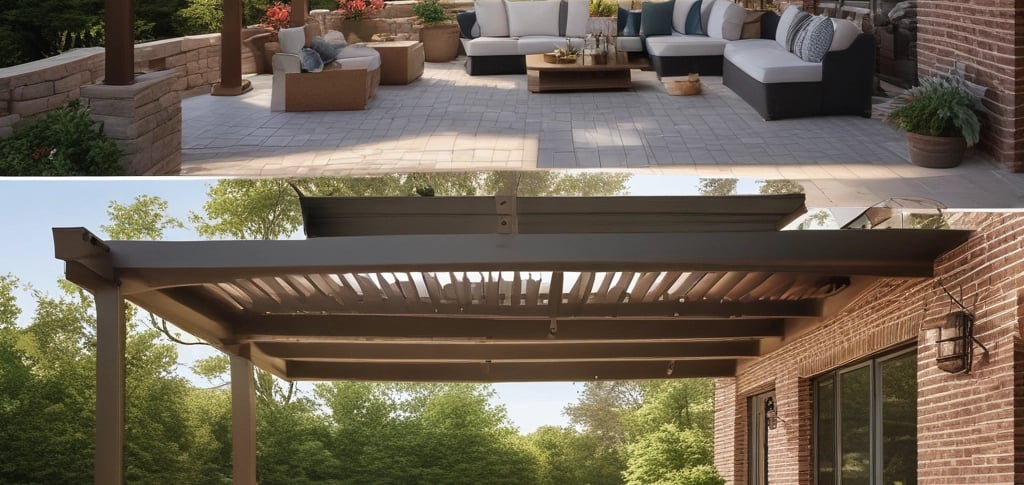
So I'm standing in my backyard three years ago, looking at this empty concrete slab that the previous owners poured, trying to decide if I should build a roof over it or just leave it open. I remember thinking "how hard can this decision be?" Turns out, super hard! I went back and forth for weeks, priced out both options, talked to contractors, annoyed my spouse with constant waffling, and generally overthought the whole thing.
Here's what finally helped me decide: understanding the real tradeoffs, not just the surface-level stuff. And honestly? I ended up doing something I didn't initially consider, which I'll get into later. But the process of evaluating covered versus uncovered patios taught me a ton about what actually matters when making this choice.
The thing is, most people approach this decision thinking there's a "right" answer, like one option is objectively better. But that's not how it works. I've got friends who built expensive covered patios they barely use because they preferred being in actual sun. I've also got friends who regret their uncovered patios because they live in places where it rains constantly and their outdoor space sits empty most of the year. The "right" choice depends entirely on your specific situation.
In this guide, I'm gonna break down everything I learned through my research and now several years of living with my decision. We'll talk about the real costs—not just the initial build but ongoing maintenance and hidden expenses. We'll cover the actual pros and cons beyond the obvious stuff. And I'll share real numbers from my experience and others I know who've built both types. Whether you're working with a tight budget or ready to invest seriously in outdoor living, understanding these tradeoffs will help you make a choice you'll actually be happy with long-term. Let's dive in!
Understanding the Basic Difference: What Defines Each Type
Before we get into pros, cons, and costs, let's make sure we're talking about the same thing because there's actually some nuance here that matters.
Uncovered patios are pretty straightforward—they're outdoor flooring surfaces (concrete, pavers, stone, whatever) with no overhead protection. You're completely open to the sky. This is what most basic patios are. My first patio was just a stamped concrete slab with some furniture on it. Nothing above your head except sky, sun, rain, and whatever else nature throws at you. Simple, basic, classic outdoor space.
Covered patios have some kind of roof or overhead structure providing protection. But here's where it gets complicated: "covered" can mean a lot of different things. A pergola with open slats is technically a covered structure even though it doesn't provide complete protection. A solid roof patio cover that's basically an extension of your house roof is also covered. Retractable awnings count as covered when they're extended. The level of protection varies wildly, which affects both cost and functionality. When I started researching, I thought "covered" just meant "has a roof," but the type of covering makes a huge difference.
Partially covered options are the middle ground that I didn't even know existed at first. You can cover just part of your patio—maybe the dining area but leave the lounging area open. Or you can have a pergola that provides dappled shade rather than complete coverage. These hybrid approaches offer flexibility but also compromise on both ends—you don't get full protection where it's covered, and you don't get full openness where it's not. I actually ended up going this route and I'll explain why later.
How coverage affects functionality and use is the real core of this decision. An uncovered patio is weather-dependent—if it's raining, you're not using it. If the sun is brutal, you're probably not using it. A fully covered patio extends usability across more weather conditions and times of day. My neighbor has a covered patio and she's out there during light rain, during intense sun, basically anytime. My partially covered setup gives me flexibility but I still avoid it during heavy rain. Think about when you actually want to use outdoor space and whether coverage enables or limits that.
Regional considerations make a massive difference in this decision. I live in a place with hot summers and mild winters—shade is essential for summer use but I want sun exposure in winter. If I lived in the Pacific Northwest where it rains constantly, I'd probably prioritize full coverage. If I lived in Southern California with perfect weather year-round, an uncovered patio would work great. My parents live in Arizona and an uncovered patio is basically unusable from May through September because of extreme heat. Your climate should heavily influence this choice—don't just copy what looks good on Pinterest.
Resale value implications of each option vary by market. In my area, covered patios are seen as premium features that add value. But in some markets, buyers actually prefer uncovered because they want flexibility or don't want the maintenance. I talked to a realtor friend who said that in our region, a well-built covered patio can return 60-75% of its cost in resale value, while a basic uncovered patio returns maybe 40-50%. But this is super regional. Research what buyers in your specific market prefer before assuming one adds more value.
The Case for Uncovered Patios: Benefits and Advantages
Let me make the case for uncovered patios because they definitely have legitimate advantages that aren't just about saving money.
Lower upfront cost and installation expenses is obviously the big one. My 12x16 concrete patio cost about $3,000 installed. A covered version of the same space would've been $8,000-15,000 depending on the type of cover. That price difference is significant—we're talking thousands of dollars that could go toward furniture, landscaping, or just staying in your bank account. If budget is tight, an uncovered patio gets you outdoor living space for a fraction of the cost. You can always add coverage later if you decide you want it.
Maximum natural light and open-sky feeling is something you genuinely lose with coverage. There's a psychological difference between sitting under open sky versus under a roof, even if the roof is just a pergola. I love lying on my patio lounge chair and looking up at clouds moving across the sky, watching birds fly over, seeing stars at night. You can't do that under a solid roof. Some people really value that connection to the sky—it feels more like being truly "outside" rather than in a semi-enclosed space.
Easier and faster to build means less disruption to your life. My concrete patio was poured and ready to use in like three days—excavation, forms, pour, cure, done. A covered patio involves foundation work for posts, framing, roofing, often electrical work, and way more time. My buddy built a covered patio and his backyard was a construction zone for three weeks. If you want outdoor space quickly or can't handle extended construction, uncovered is way simpler. Less can go wrong during installation too.
Flexibility to add shade solutions later is a huge advantage I didn't appreciate initially. Starting with an uncovered patio doesn't lock you into anything. You can add umbrellas, shade sails, a pergola, or even a full roof later. You can test different shade solutions temporarily before committing to permanent structures. I experimented with various umbrellas and shade sails before deciding what worked best. If I'd built a permanent cover right away, I might've positioned it wrong or chosen the wrong type. Starting uncovered gives you time to learn how you actually use the space.
Better for sun-loving plants and gardening matters if you're into plants. I have tons of potted plants on my patio and they need full sun. Under a covered patio, I'd be limited to shade-tolerant plants which are way less interesting to me. I grow tomatoes, peppers, herbs, and flowers that all require direct sun. If your patio is also your garden space, uncovered gives you way more options. Covered patios can feel like outdoor rooms but they're not great for serious gardening.
Stargazing and outdoor dining under the stars is one of those romantic benefits that actually matters in practice. Some of my best summer memories are eating dinner on my patio under the stars or lying out watching meteor showers. You lose that with a roof overhead. Even a pergola partially blocks the sky. If you value that connection to the night sky, it's a legitimate reason to stay uncovered. It sounds silly but when you're actually out there on a clear night, you'll appreciate having nothing between you and the stars.
Lower ongoing maintenance requirements keep things simpler. My uncovered patio needs occasional power washing and resealing every few years. That's it. No roof to maintain, no gutters to clean, no structural elements to inspect or repair. Less to break, less to maintain, less hassle. I spend maybe 2-3 hours per year on patio maintenance. My neighbor with a covered patio spends way more time dealing with roof maintenance, cleaning gutters, checking for rot or damage. If you want low-maintenance outdoor space, uncovered wins.
Preserving architectural sightlines and views from inside the house is something I didn't think about but my architect friend pointed out. A covered patio structure can block views from inside your house. My living room windows look out onto my patio and yard beyond—a roof structure would've partially obstructed that view. If you've got nice sightlines from inside, adding overhead structure might compromise them. This matters more to some people than others, but it's worth considering how a cover will look from inside your home.
Uncovered Patio Drawbacks: The Real Limitations
Okay, now let me be real about the downsides of uncovered patios because they're significant and you should go into this with eyes open.
Limited usability during rain and harsh weather is the obvious big drawback. When it rains, my patio is basically off-limits. I can't eat outside, can't hang out, can't do anything unless I want to get soaked. During our rainy season (about 3 months of the year here), I probably use my patio 60% less than during dry months. If you live somewhere with frequent rain, this seriously limits how much value you get from the space. My friend in Seattle has an uncovered patio and she uses it maybe 30 days per year. That's terrible ROI.
No protection from intense sun and UV exposure means you're at the mercy of weather. During summer, my patio is unusable from about noon to 5pm because the sun is just too intense. Even with umbrellas, it's uncomfortable. I get sunburned if I'm out there too long. The UV exposure is significant—my dermatologist would definitely not approve of me hanging out on my uncovered patio during peak sun. If you live in a hot sunny climate, plan on your uncovered patio being unusable during the hottest parts of the day unless you add substantial shade.
Furniture deterioration from weather exposure is real and it gets expensive. Even "outdoor-rated" furniture fades and deteriorates faster in constant sun and rain. My outdoor cushions lasted maybe three years before they were sun-faded and gross. I've replaced them twice now. The wood on my furniture dried out and cracked. Metal furniture rusted at joints. I now bring cushions inside after every use and cover furniture when we're not using it, which is annoying. Covered patio furniture lasts way longer because it's protected. Factor in replacement costs when budgeting for uncovered patios.
Seasonal limitations in many climates affect year-round usability. My patio is great from April through October but basically unused November through March. That's like 40% of the year where I get zero value from it. In regions with harsh winters, uncovered patios might be unusable 6+ months per year. You're essentially building something you can only use part-time. Covered patios extend the usable season significantly. If maximizing year-round use matters to you, uncovered probably isn't the best choice.
Temperature extremes make the space uncomfortable without intervention. I mentioned summer heat, but winter cold is also an issue. My patio furniture is freezing cold in winter—you can't sit on it comfortably. In summer, dark furniture gets scorching hot. The concrete itself radiates heat in summer and is ice-cold in winter. These temperature extremes mean the space is only comfortable during moderate weather. You can't really heat or cool an uncovered space effectively, so you're limited to naturally comfortable conditions.
No protection for outdoor electronics or delicate items means you can't leave anything valuable outside. I learned this when I left a Bluetooth speaker out overnight and dew moisture damaged it. Rain ruins electronics obviously, but even humidity and dew can cause problems. I can't leave my laptop out there, can't set up a TV for outdoor movie nights without worrying about weather, can't leave books or magazines out. Everything has to come inside constantly. A covered patio lets you treat outdoor space more like an extension of your house.
Snow and ice accumulation issues in winter make uncovered patios extra problematic in cold climates. My parents live where it snows and their uncovered patio becomes completely unusable all winter—covered in ice and snow that's difficult to remove. When it finally melts, you've got standing water and freeze-thaw damage to deal with. Snow-covered furniture looks sad and abandoned. If you're in a snowy region, an uncovered patio is basically seasonal-use only and might even create maintenance problems from snow/ice damage.
Bird droppings and falling debris problems are gross and annoying. Birds love to hang out on my patio furniture and leave their mark, if you know what I mean. I'm constantly cleaning bird poop off chairs and tables. Leaves, twigs, pine needles, and other tree debris fall onto the patio and need frequent sweeping. After windy storms, I'm out there for 30 minutes cleaning up debris. A roof would catch most of this stuff before it lands on your furniture and floor. It's a minor thing but it adds up to regular cleaning hassle that gets old.
The Case for Covered Patios: Key Benefits
Now let me make the case for covered patios, because after living with my decision, I definitely understand the appeal.
Year-round usability regardless of weather is the primary selling point. My neighbor uses her covered patio in light rain, during hot summer days, in winter when it's chilly but not freezing. She gets value from that space probably 300+ days per year versus my maybe 180 days with an uncovered patio. If you're investing money in outdoor living space, maximizing the days you can actually use it makes financial sense. The weather-protection means spontaneous use—you don't have to check the forecast before planning to eat outside.
Protection for furniture, flooring, and belongings makes everything last longer and look better. My neighbor's patio furniture looks almost new after five years because it's protected from sun and rain. My furniture looks weathered and tired after three years of full exposure. Her cushions haven't faded, the wood hasn't dried out, nothing has rusted. Over time, this protection saves money on replacement costs. If you're investing in nice outdoor furniture, protecting it makes sense. You can also leave things outside—she's got a little bar cart with glasses and supplies that just lives out there.
Significant shade and UV protection benefits make the space more comfortable and healthier. No sunburn risk, no squinting in bright sun, comfortable temperatures even on hot days. My neighbor's covered patio stays probably 10-15 degrees cooler than my uncovered space during summer. She can sit out there midday and be comfortable while I'm hiding inside. If you actually want to use outdoor space during prime daylight hours in summer, shade is essential. The UV protection also means less skin cancer risk, which as I'm getting older, I'm taking more seriously.
Extended living space that feels like an outdoor room is a different vibe than an uncovered patio. Her covered patio feels like a bonus room—she's got a ceiling fan, string lights, it's furnished like a living room. It genuinely feels like an extension of her house. My uncovered patio feels more like "I'm outside on the patio"—it's distinctly separate from the house. Neither is better or worse, just different vibes. If you want outdoor space that functions like an extra room, covered delivers that feeling better.
Increased home value and buyer appeal is significant in many markets. When houses in my neighborhood sell, the ones with nice covered patios typically sell faster and for more money than comparable houses with basic uncovered patios. Buyers see covered outdoor space as premium. It photographs better in listings, it shows better during tours, and it's perceived as a value-add feature. My realtor friend says covered patios are specifically called out by buyers as desired features, while uncovered patios are kind of expected baseline.
Energy savings by shading adjacent walls and windows is a real benefit I didn't consider initially. My neighbor's covered patio shades her west-facing sliding doors and wall. Her air conditioning runs less because that side of her house doesn't get blasted by afternoon sun. Studies show that shading walls and windows can reduce cooling costs by 15-25%. Over years of ownership, that adds up to real money. Her covered patio paid for itself partially through energy savings. If your patio is adjacent to your house, this benefit is significant.
Defined outdoor room with ceiling ambiance creates better atmosphere for entertaining. The ceiling defines the space and makes it feel more intimate. She's got string lights hung from the ceiling, a ceiling fan, the overhead structure just makes everything feel more designed and intentional. It photographs better, it feels cozier, guests are more drawn to gather there. There's something about having a "ceiling" that changes the psychology of the space. It feels protected and enclosed in a good way.
Protection from rain allows spontaneous outdoor use without weather-checking. She can decide last-minute to eat dinner outside without worrying if it'll rain. She doesn't bring cushions inside every night or cover furniture. In summer, sudden afternoon thunderstorms don't ruin outdoor plans—she just stays under cover. This flexibility makes the space more functional in daily life. I'm constantly checking weather forecasts before committing to outdoor activities, and it gets annoying.
Covered Patio Drawbacks: What You Should Know
But covered patios aren't perfect either, and these drawbacks are worth serious consideration.
Higher initial construction costs are significant—we're talking thousands to tens of thousands more than uncovered. A basic covered patio in my area starts around $8,000 and goes up from there depending on size and materials. My neighbor's covered patio cost $18,000 versus $3,000 for my uncovered space. That's a massive price difference. You can furnish an uncovered patio beautifully with the money you save. If budget is tight or you have other priorities, the cost difference might make covered patios impractical. Not everyone has an extra $15,000 sitting around for patio covers.
More complex permitting and building code requirements mean more hassle and potential delays. Uncovered patios often don't require permits or require only simple permits. Covered structures typically need building permits, engineering drawings, inspections, the whole thing. My neighbor waited three months for permit approval before construction could even start. Some areas have strict requirements about setbacks, height limits, materials. HOAs might have additional rules. If you hate dealing with bureaucracy or want something quick, these requirements are a real pain.
Reduced natural light in adjacent indoor rooms can be a problem depending on placement. My neighbor's covered patio blocks some light from entering her dining room. It's noticeably dimmer inside now, and she runs lights more during the day. If your patio is adjacent to rooms that rely on natural light, adding a cover will reduce interior brightness. This might not matter if those rooms have other light sources, but it's worth considering. I specifically decided against covering my patio partially because I didn't want to darken my kitchen.
Ongoing maintenance of roof and structural elements adds to your to-do list and budget. Roofs need maintenance—cleaning gutters, checking for leaks, repairing damage, eventually replacing roofing materials. My neighbor has to clean leaves out of her patio cover gutters twice a year. She's had to repair a few shingles that blew off in storms. Wood structures need staining or sealing. Hardware loosens over time. It's not crazy maintenance but it's definitely more than an uncovered patio requires. Factor in this ongoing time and cost.
Potential for feeling enclosed or cave-like affects some people negatively. My spouse actually doesn't love covered patios because she feels like they're too enclosed—she wants to be "actually outside" not in a semi-indoor space. Some people have this reaction while others love the sheltered feeling. If you value that open-air connection to nature, a roof overhead might feel constricting. This is totally personal preference but worth testing—spend time on friends' covered patios and see how you feel.
Limited direct sunlight for plants means gardening options are reduced. Under a covered patio, you're limited to shade-tolerant plants. Most vegetables won't grow well. Flowering plants that need full sun won't thrive. If you want a patio full of colorful sun-loving plants, covering it limits your options. You can still have plants but the selection is more restricted. For serious gardeners, this might be a dealbreaker. I wouldn't want to give up growing tomatoes and peppers on my patio.
Can obstruct views from inside the house depending on design and placement. The posts, beams, and roof structure can block sightlines from interior windows. My neighbor's view from her living room now includes the pergola posts and beams rather than straight through to the yard. Some people don't care, others find it annoying. If you've got beautiful views from inside that you value, consider how a covered structure will affect them. This is especially relevant if you have large windows or doors facing the patio.
May require professional installation and design increases costs and reduces DIY options. Building a covered patio properly requires carpentry skills, understanding of structural requirements, and often electrical work. It's not a beginner DIY project like a simple concrete patio might be. Most people hire professionals, which adds significantly to cost. I'm fairly handy but I wouldn't attempt building a covered patio myself—too much can go wrong and the stakes are higher with a structural element. If you were hoping to DIY to save money, that's harder with covered patios.
Cost Breakdown: Uncovered Patio Installation
Let's get into real numbers because this is where decisions often get made. These are based on my research and actual costs from my area (Midwest US) in recent years.
Basic concrete slab patio costs run about $6-$12 per square foot installed. My 12x16 patio (192 square feet) was $3,100 total—about $16 per square foot, but that included some site prep and a basic broom finish. Truly basic concrete is cheaper. A 10x10 patio (100 sq ft) might be $600-1,200. A larger 16x20 patio (320 sq ft) would be $1,920-3,840. These are DIY or basic contractor prices. Concrete is the most affordable patio material and perfectly functional. It's not fancy but it works and lasts decades with minimal maintenance.
Pavers and natural stone options are more expensive but way nicer looking. Pavers run $15-$30 per square foot installed depending on material quality. My neighbor did a 12x16 paver patio for about $5,200 using mid-grade concrete pavers. Natural stone like flagstone or bluestone is even pricier—$20-$40+ per square foot. A 200 square foot natural stone patio could easily hit $6,000-8,000. The material cost is higher, plus installation is more labor-intensive than concrete. But the aesthetic is significantly better if that matters to you.
Stamped or decorative concrete splits the difference—nicer than basic concrete, cheaper than pavers. Costs $10-$25 per square foot typically. My buddy did a 14x18 stamped concrete patio (252 sq ft) for about $4,500, so roughly $18 per square foot. It looks like stone or brick but costs less than the real thing. The pattern and color options make it way more attractive than plain concrete. If you want something nicer than basic but can't afford pavers, stamped concrete is a solid middle option.
Gravel or crushed stone budget options are the cheapest route—$2-$5 per square foot for materials and basic installation. I helped my friend do a 10x12 crushed stone patio for under $200 in materials plus a weekend of labor. It's not as nice or permanent as concrete but it functions fine for casual use. You'll need landscape fabric underneath and edging to contain the stone. Gravel shifts over time and needs occasional refreshing. But for absolute budget patio, it works. Good temporary solution or for very casual use.
DIY versus professional installation costs vary dramatically. My concrete patio would've been maybe $1,200-1,500 in materials if I'd DIY'd it, but I paid $3,100 for professional installation. So labor was roughly half the total cost. Pavers are even more labor-intensive—probably 60-70% of cost is labor. If you're handy and have time, DIY saves a ton of money. But concrete is heavy work and needs to be done right. Pavers are tedious and time-consuming. I chose to pay for professional concrete because I didn't want to risk messing it up.
Typical size costs help with planning. A small 10x10 (100 sq ft) concrete patio: $600-1,200. Medium 12x16 (192 sq ft): $1,900-3,800 for concrete, $2,900-5,800 for pavers. Large 16x20 (320 sq ft): $3,200-6,400 for concrete, $4,800-9,600 for pavers. Extra large 20x20 (400 sq ft): $4,000-8,000 for concrete, $6,000-12,000 for pavers. These are ballpark figures—your actual costs will vary based on location and specific choices.
Regional price variations are significant. Costs in major coastal cities can be 50-100% higher than Midwest prices. My cousin in San Francisco paid nearly double what I paid for a comparable patio. Rural areas might be cheaper. Labor costs drive most of the regional variation. Get multiple local quotes before budgeting. Don't assume national average costs apply to your area. I made that mistake initially and my budget was way off.
Long-term cost considerations include resealing (concrete needs this every 3-5 years, costs $200-400 for a medium patio), repairs (cracks happen, especially in freeze-thaw climates), and eventual replacement (though concrete lasts 25-50+ years). Budget maybe $50-150 per year in long-term maintenance costs. Still way cheaper than covered patio maintenance but not zero. Factor this into your total lifetime cost.
Cost Breakdown: Covered Patio Installation
Now the covered patio costs, which are significantly higher and more complex.
Pergola covering costs vary wildly—$3,000-10,000 is typical range for a decent-sized pergola. I got quotes for my 12x16 space ranging from $4,200 for a basic wood DIY kit to $9,500 for a custom cedar pergola professionally installed. That's just for the structure—if you add retractable canopy, electrical, or climbing plants, add more cost. Pergolas are the cheapest covered option but they don't provide complete weather protection. They're really more decorative and provide dappled shade rather than full coverage.
Solid roof patio cover costs are where it gets expensive—$8,000-25,000+ depending on size and materials. My neighbor's 16x20 solid roof cover with shingles matching her house cost $18,000 professionally installed. That included engineering, permits, labor, materials, everything. A friend did a smaller 12x12 aluminum roof kit for $6,500 with some DIY labor. Larger or more complex designs easily exceed $25,000. This is real money and needs to be carefully budgeted.
Retractable awning costs are middle-ground—$1,500-5,000 installed for motorized options. Manual retractable awnings are cheaper, maybe $800-2,500. I got quotes for a 14-foot retractable awning ranging from $1,800 to $4,200 depending on quality and features. These provide flexible coverage but don't last as long as solid structures—expect 10-15 year lifespan versus 20-30+ for permanent structures. Still, they're way cheaper than building a solid roof.
Screened porch conversion costs are the high end—$15,000-35,000+ to fully enclose an existing patio. This includes screening, roof, foundation work if needed, door installation, often electrical and lighting. My parents converted their 14x16 patio to a screened porch for $24,000. You're basically building a room at this point. The cost per square foot approaches or exceeds interior room additions. But you get a fully protected, bug-free outdoor space.
Material cost differences are significant. Basic pressure-treated wood pergola: $3,000-5,000. Cedar or redwood: $5,000-8,000. Vinyl: $6,000-9,000. Aluminum: $7,000-11,000. Fiberglass: $8,000-12,000. Higher-end materials cost more upfront but often require less maintenance. I priced out both wood and aluminum for my space and aluminum was $4,000 more but would never need painting or sealing. Over 20 years, the aluminum might actually be cheaper considering maintenance savings.
Labor costs for professional installation typically run $50-150 per hour depending on region and contractor expertise. For a medium covered patio, figure 40-80 hours of labor—that's $2,000-12,000 just in labor costs. More complex designs or features require more hours. Electrical work (if adding lights or fans) is additional and often requires a licensed electrician at $75-150 per hour. Getting detailed labor estimates upfront prevents surprise costs.
Permit and engineering fees add $500-2,000+ to most covered patio projects. Building permits in my area run $350-800 depending on project value. Engineering drawings (required for structural elements in many jurisdictions) cost $500-1,500. Some contractors include these in their quotes, others charge separately. Factor these into your total budget. Skipping permits to save money is risky—you might have problems selling your house later or face fines if discovered.
Hidden costs include electrical ($500-2,000 for basic lighting and outlets), ceiling fans ($300-800 installed), upgraded flooring to match the nicer covered space ($1,000-3,000), gutters and drainage ($400-1,200), and often furnishing upgrades because you've now got a nicer space. My neighbor estimated she spent $4,000 beyond her cover construction cost on these "extras" that suddenly seemed necessary. Budget 15-25% extra beyond the base structure cost for these additions.
Roofing Material Options for Covered Patios
The roof material you choose dramatically affects cost, appearance, maintenance, and longevity.
Shingle roofs matching house aesthetics is what my neighbor did and it looks seamless. The patio cover roof uses the same shingles as her house roof, so it looks like an intentional part of the original house rather than an add-on. Cost is moderate—$4-8 per square foot for materials plus installation. Shingles last 15-25 years depending on quality. They require basically the same maintenance as your house roof—occasional inspections, gutter cleaning, eventual replacement. The cohesive look is worth it if architectural harmony matters to you.
Metal roofing offers durability and modern look. Costs $7-12 per square foot typically. Lasts 30-50 years with minimal maintenance. I almost went with a standing seam metal roof for my patio—it looks crisp and modern, never needs sealing or painting, and handles weather perfectly. The downside is noise—rain on metal is loud. Some people love that sound, others find it annoying. Also, metal absorbs and radiates heat, so metal-roofed patios can be hotter unless you add insulation or use reflective coatings.
Polycarbonate panels for translucent light-filtering coverage is an interesting middle option. These panels let light through while blocking UV and providing rain protection. Cost is $3-6 per square foot for materials. They keep covered spaces brighter than solid roofs while still providing weather protection. I love this concept—you get coverage without creating a dark cave-like space. The downside is they can look a bit industrial/commercial rather than residential. They also potentially discolor or yellow over time with UV exposure.
Lattice and open-beam pergolas are the lightest coverage option. They provide dappled shade and architectural interest but minimal weather protection. Costs $2-5 per square foot just for the overhead lattice/beams. You can add shade cloth or fabric later for more coverage. This is what I ended up choosing—an open pergola that I can augment with removable shade cloth seasonally. Gives me flexibility and cost less upfront while still providing some shade and defining the space overhead.
Retractable fabric canopies offer adjustable coverage. These attach to pergola or other structure and extend/retract as needed. Manual versions cost $300-1,000 depending on size. Motorized retractable canopies run $1,500-4,000. The fabric needs replacement every 7-12 years (cost $200-800 depending on size). I have a friend with this setup and she loves the flexibility—open on nice days, covered when sun is harsh or if it starts drizzling. Best of both worlds if you're willing to manage the adjustments.
Clay or concrete tiles for Mediterranean style look amazing but are expensive and heavy. Cost $10-18 per square foot installed. They're incredibly durable—last 50-100 years. But they're heavy and require substantial structural support which increases construction costs. They also absorb heat and can make covered spaces hotter. Really only makes sense if you're going for a specific Mediterranean or Spanish colonial aesthetic. They look gorgeous but the cost premium is hard to justify functionally.
Each material's lifespan and maintenance needs vary significantly. Shingles: 15-25 years, moderate maintenance. Metal: 30-50 years, low maintenance. Polycarbonate: 10-20 years, low maintenance but may discolor. Wood lattice: 15-25 years, moderate-high maintenance (sealing/staining). Fabric: 7-12 years, low maintenance but needs replacement. Tile: 50-100 years, low maintenance. Choose based on how long you plan to stay in your home and your tolerance for maintenance.
Cost comparison across materials for a typical 12x16 patio cover: Basic wood pergola with lattice: $3,000-5,000. Shingle roof: $6,000-10,000. Metal roof: $7,500-11,000. Polycarbonate panels: $4,500-7,500. Tile roof: $10,000-15,000. Retractable canopy system: $4,000-7,000. Obviously, professional installation, engineering, and extras increase all these numbers, but this gives relative comparison.
Climate Considerations: Which Option Fits Your Region
Your climate should heavily influence this decision—maybe more than any other factor except budget.
Hot, sunny climates make shade almost essential for outdoor space usability. If you live in Arizona, Texas, Florida, Southern California, or similar regions, an uncovered patio will be unusable during the hottest months without serious shade solutions. My friend in Phoenix has an uncovered patio and literally can't use it from May through September—it's too hot even in early morning. If you're in a hot climate, invest in substantial shade whether that's a solid cover, pergola with shade cloth, or extensive tree coverage. The ROI is higher because you're making the space actually usable.
Rainy regions make covered patios way more valuable. Pacific Northwest, coastal areas, anywhere with frequent precipitation—covered outdoor space dramatically extends usability. My cousin in Seattle says her covered patio is the only reason she has any functional outdoor space at all. Without it, her patio would sit empty 200+ days per year. If you get frequent rain, the investment in coverage pays off in dramatically increased usage. Uncovered patios in rainy climates are often money wasted because they're rarely usable.
Cold climates with harsh winters reduce ROI for both types but especially uncovered. If your outdoor space is only usable 4-5 months per year due to snow and cold, you're getting less value regardless. A covered patio at least protects furniture and can potentially be used with outdoor heaters during shoulder seasons. My parents in Minnesota use their covered patio from April through October—maybe 7 months. Their uncovered deck gets used June through August—3 months. The coverage extends the season but doesn't make winter use practical.
Temperate areas with mild weather year-round allow uncovered patios to work great. If you live somewhere with naturally comfortable weather most of the year (San Diego, coastal California, parts of the Southeast), an uncovered patio might be totally fine. You'll use it 9-10 months per year with minimal issues. The cost of adding coverage might not be justified by the benefits. My buddy in San Diego has a basic uncovered patio and uses it constantly—their weather is just that good.
Wind exposure affects structural requirements and costs for covered patios. High-wind areas require stronger construction, deeper foundations, heavier materials. This increases costs significantly. I'm in a moderate wind area but got quotes for wind-rated construction versus standard—the wind-rated version was $2,500 more for the same size patio cover. Coastal areas, plains states, anywhere with frequent high winds needs to factor this into design and budget. Uncovered patios don't have wind concerns beyond securing furniture.
Snow load considerations for covers are critical in snowy regions. Patio cover structures must be engineered to handle snow weight or they'll collapse. This requires stronger beams, more support posts, specific roof pitches—all adding to cost. My parents' covered patio in Minnesota was engineered for 40 pounds per square foot snow load and cost significantly more than it would in a no-snow climate. If you get heavy snow, factor engineering requirements into your decision. Flat or low-slope roofs need extra strong construction to handle weight.
Humidity and ventilation needs matter for covered spaces. High-humidity areas can develop mold/mildew issues under covered patios if ventilation is inadequate. I've seen covered patios in Florida with mold problems because they weren't designed for airflow. Open-beam pergolas provide better ventilation than solid roofs. If you're in humid climate, make sure your covered patio design includes good airflow. Uncovered patios obviously don't have this issue.
How local weather patterns should influence choice: Track your weather over a year. How many days per year is it too hot to comfortably sit in sun? Too rainy to sit outside? How many perfect weather days do you get? If you've got 200+ perfect days, maybe uncovered is fine. If you've got 100 rainy days and 100 too-hot days, covered suddenly looks essential. Your specific microclimate and weather patterns should be primary decision factors. Don't just go by regional generalizations—observe your actual yard.
Maintenance Requirements: Uncovered vs. Covered
Let's talk real ongoing maintenance because this affects long-term costs and hassle factor.
Uncovered patio maintenance for my concrete patio includes power washing once or twice per year (30 minutes each time), resealing every 3-4 years (costs $200-400 for professional or $50-100 DIY materials), and occasional crack repair ($50-200 depending on severity). I sweep regularly to remove debris, maybe 10 minutes per week. Total annual maintenance: probably 5-8 hours plus occasional costs. It's pretty minimal. Paver patios need periodic re-sanding of joints and occasional re-leveling if pavers shift. Still relatively low maintenance overall.
Covered patio maintenance is more involved. My neighbor cleans gutters on her patio cover twice per year (45 minutes each time). Inspects roof annually for damage (30 minutes). Wood structures need staining or sealing every 2-3 years (costs $300-600 professional or significant DIY time). Metal structures might need occasional rust treatment. Checking/tightening hardware annually (30 minutes). Cleaning the underside of the roof where cobwebs and dirt accumulate (couple times per year). She estimates 12-15 hours annual maintenance plus periodic costs.
Annual maintenance time and cost comparison for a typical 12x16 patio: Uncovered concrete—5-8 hours labor, $50-100 in materials yearly, plus $200-400 every 3-4 years for sealing. Covered wood patio—12-15 hours labor, $100-200 materials yearly, plus $400-800 every 2-3 years for refinishing. Covered vinyl or aluminum—8-10 hours labor, $50-100 materials yearly, minimal periodic costs. The time and cost differences add up over 10-20 years of ownership.
Furniture and decor maintenance differences are significant. Uncovered patio furniture needs covers when not in use, frequent cleaning from weather exposure, more frequent replacement due to deterioration. I replace cushions every 2-3 years versus my neighbor's 5-7 years. Covered patio furniture basically lasts as long as indoor furniture with minimal weathering. She can leave decorative items, books, cushions out permanently without worry. I have to bring everything in constantly or it gets ruined. This ongoing hassle is real maintenance time.
Gutter and drainage maintenance for covered patios is essential. Gutters clog with leaves and debris—if they overflow, water can damage the structure or flood the patio. My neighbor cleans gutters twice per year without fail. Downspouts need periodic checking to ensure proper drainage. The drainage around covered patios needs maintenance to prevent water accumulation. This is maintenance that uncovered patios don't require at all. If you hate gutter cleaning, this is a point against covered patios.
Pest control considerations differ between types. Wasps and birds love building nests in covered patio structures. My neighbor deals with wasps every summer trying to build nests in the corners of her patio cover. She has to spray and remove nests regularly. Spiders build webs in covered spaces. Uncovered patios have fewer pest harborage issues—there's nowhere protected for nests. Though uncovered furniture can still attract pests. Both require some pest management but covered patios provide more pest-friendly habitat.
Snow removal and winter care varies by type. Uncovered patios in snowy areas need snow cleared off furniture and the patio surface itself if you want it usable. Salt or ice melt can damage some patio materials. Covered patios protect furniture but the roof structure must handle snow load. Ice dams can form on patio cover roofs. My parents shovel snow from around their covered patio posts to prevent moisture damage. Neither option is maintenance-free in winter but the maintenance is different.
Long-term repair and replacement costs are where covered patios get expensive. Roofing materials eventually need replacement—shingles last 20-25 years, then you're looking at $2,000-5,000+ for replacement. Wood structures might need board replacement as rot develops. Hardware corrodes and needs replacement. My neighbor's 15-year-old covered patio has needed about $3,000 in repairs and component replacements beyond routine maintenance. My 10-year-old uncovered patio has needed maybe $500 total in repairs. This long-term cost difference is substantial.
Hybrid Solutions: Getting the Best of Both Worlds
After all my research and observation, I realized I didn't have to choose one or the other completely. Hybrid approaches offer flexibility.
Pergolas with retractable canopies are what I ultimately chose. I built a basic pergola structure ($4,200) and added a retractable shade canopy ($800). When I want full sun, I retract it. When afternoon sun is harsh or it looks like rain, I extend it. Best of both worlds—open sky when I want it, coverage when I need it. Total cost was about $5,000 versus $3,000 for completely uncovered or $15,000+ for solid roof. I get most of the benefits of both options.
Partial coverage by covering just the dining area works great if you use different zones differently. My buddy covered just the 10x12 section where his dining table sits but left the rest of his patio uncovered for lounging in sun. Cost was half what full coverage would've been, and functionally it works perfect—they eat outside in any weather but can still sunbathe on loungers. This targeted approach maximizes value per dollar spent.
Removable shade sails for seasonal adjustment gives incredible flexibility. I have shade sails I put up April through October and take down for winter. Installation takes maybe 45 minutes, removal takes 30 minutes. Total cost was $600 for two large shade sails and mounting hardware. I get substantial shade coverage for 7 months when I need it, full sun exposure in winter months when I want it. The removability means I can adjust annually based on actual needs.
Combining umbrellas with permanent structures extends coverage without huge expense. My pergola provides some shade, my umbrellas provide targeted additional shade where needed. Total flexibility—move umbrellas around based on sun angle and time of day. Can add or remove umbrellas based on number of people using the space. This layered approach to shade lets me fine-tune coverage rather than committing to fixed full coverage.
Phased approach of starting uncovered and adding coverage later is smart financially. I started with just the concrete patio for $3,000. Lived with it for two years and learned exactly how I used the space and where I needed shade. Then added the pergola based on actual experience rather than guessing. This prevented expensive mistakes and spread costs over time. If budget is tight, build uncovered first and upgrade later when you can afford it.
Multi-zone patios with both covered and uncovered areas is my dream setup for the future. Imagine a patio where part is fully covered for all-weather dining, part is pergola-covered for dappled shade, and part is completely uncovered for sunbathing. Different zones for different purposes and preferences. My neighbor essentially has this—her large patio has a covered section near the house and an uncovered section extending into the yard. She uses both areas regularly for different purposes.
Adjustable louvered roof systems are high-tech but amazing. These motorized roof systems have slats that rotate to let sun through or block it entirely. You can adjust from full sun to full shade with a button. They're expensive—$12,000-25,000 installed—but if budget allows, they're the ultimate flexible solution. Completely customizable coverage at any time. I saw one at a friend's house and it's incredibly cool. Someday when I'm rich, this is what I'll upgrade to.
Cost-effective compromise options I recommend: Start with good quality uncovered patio ($4,000-6,000 for pavers in a medium size). Add large cantilever umbrellas ($500-800 each) for immediate shade. Install one or two shade sails seasonally ($300-600). Total investment around $5,500-8,000 gets you a really nice uncovered patio with substantial flexible shade. You've spent half what a covered patio costs but gotten 80% of the benefits. This is what I tell friends to do.
Return on Investment: Which Adds More Home Value
Since patios are expensive, understanding the return on investment matters, especially if you might sell your house eventually.
Resale value impact of covered versus uncovered varies but covered generally wins. According to the National Association of Realtors, outdoor living spaces return 50-80% of their cost in resale value. My realtor friend says in our market, covered patios typically return 60-75% while uncovered return 40-55%. A $15,000 covered patio might add $9,000-11,000 to home value. A $4,000 uncovered patio might add $1,600-2,200. Neither are money-making propositions, but covered patios preserve more of their investment.
Regional real estate preferences matter hugely. In the Pacific Northwest, covered outdoor spaces are highly valued because they enable year-round use. In Southern California, uncovered patios are perfectly acceptable because weather is great. In hot climates like Arizona, substantial shade (whether covered patio or alternative solutions) is expected. Research what's normal and desired in your specific market. Ask local realtors what buyers look for. Don't assume national trends apply to your area.
Quality of construction affects ROI significantly. A cheap poorly-built covered patio might add zero value or even detract if it looks shabby. A well-built covered patio with quality materials that matches the house style adds substantial value. My neighbor's professionally-built covered patio that matches her house perfectly will return close to 75% of cost. My cousin's DIY pergola that looks kind of sketchy probably adds minimal value. If resale matters, invest in quality construction.
Buyer appeal in different markets shows interesting patterns. My realtor says that in our market, 70% of buyers specifically want covered outdoor space when looking at homes. It's in their top 10 desired features. In other markets, it's nice-to-have but not essential. Families with kids often want covered space for shade and weather protection. Retirees like covered patios for comfortable outdoor living. Young buyers sometimes prefer uncovered for lower maintenance. Know your likely buyer demographic.
Cost recoupment percentages from various sources: Remodeling Magazine's Cost vs. Value Report shows outdoor living spaces recouping 50-65% on average nationally. Realtor.com data suggests 55-75% for well-executed projects. My own observation in my neighborhood: well-done covered patios recoup 60-70%, uncovered patios recoup 40-50%. These are averages—your specific ROI depends on execution quality, market conditions, and buyer preferences at time of sale.
Covered patios as additional square footage is a gray area. They're not counted as finished interior square footage, but they are often noted in listings as "additional covered outdoor living space." Some appraisers give them significant weight, others minimal. My neighbor's appraiser noted her 320 square foot covered patio as a specific value-add worth approximately $8,000 (her construction cost was $18,000). The fact that it's protected, finished space with electrical makes it more valuable than raw outdoor area.
Impact on appraisal values varies by appraiser and situation. Some appraisers barely acknowledge outdoor improvements. Others specifically call them out as value-adds. Location matters—waterfront or view properties place higher value on outdoor living spaces. Luxury markets value elaborate outdoor rooms highly. Starter home markets may not care as much. When we refinanced, our appraiser noted our patio and pergola but didn't assign specific dollar values—frustrating lack of clarity.
Which option attracts more buyers is interesting. In my market, listings that highlight "covered patio" or "outdoor living room" get more showings and often sell faster than comparable homes without. But this could be correlation rather than causation—homes with covered patios might just be better maintained overall. Uncovered patios are kind of baseline expected—they don't really attract buyers but their absence might deter some. Covered patios are a positive selling point that gets specifically mentioned and photographed in listings.
Permit and Building Code Requirements
This bureaucratic stuff is boring but important—ignoring it can cause serious problems later.
When permits are required for each type varies by jurisdiction. In my area, concrete patios under 200 square feet don't require permits. Pavers generally don't require permits regardless of size since they're not permanent structures. Any covered structure requires a permit no matter how small. My pergola needed a full building permit even though it's just open beams. Some areas are more relaxed, others are stricter. Call your local building department and ask—don't assume or guess.
Setback requirements and property line restrictions affect where you can build. My city requires all structures to be at least 5 feet from property lines. Some areas require 10+ feet. My neighbor wanted to extend her covered patio closer to her fence but setback rules prevented it. Uncovered patios often have more relaxed setback requirements. These rules exist to prevent disputes with neighbors and maintain access for emergency vehicles. Violating setbacks can force expensive modifications or removal.
Height limitations for covered structures prevent blocking neighbors' views or creating safety issues. My area limits patio covers to 15 feet maximum height. Some HOAs have stricter limits—12 feet or even 10 feet. Pergolas can sometimes exceed these limits if they're open-beam design, but solid roofs usually can't. If your lot slopes or you want a tall structure for some reason, height limits might be a problem. Check before finalizing designs.
HOA approval processes can be more restrictive than city codes. My HOA requires architectural review for any permanent structure including covered patios. They rejected my neighbor's first design because they didn't like the style—made him redesign to better match his house. This delayed his project by two months. Some HOAs ban certain materials or colors. Some require matching roof lines with existing house. Read your HOA rules carefully and submit for approval before spending money on plans.
Structural engineering requirements apply to most covered structures. My pergola needed stamped engineering drawings showing it could handle wind and snow loads. Cost $650 for the engineer to prepare these. Larger or more complex covered patios might need more extensive engineering at higher cost. This isn't optional in most jurisdictions—the building department won't issue permits without proper engineering for structural elements. Factor this cost and time into your planning.
Electrical and plumbing permits for amenities are separate from the structure permit. I wanted to add outlets and lighting to my pergola—needed an electrical permit and licensed electrician. Added $1,200 to my project. If you're adding an outdoor kitchen with plumbing, you'll need plumbing permits. These are usually handled by your contractor but they add cost and time. Each permit requires separate inspection. The permitting process for a fully-featured covered patio can involve 3-4 different permits.
Inspection requirements during construction mean you can't just build and be done. My pergola required three inspections: footing inspection before pouring concrete, framing inspection before installing roof, and final inspection. Each inspection had to be scheduled and passed before proceeding. Failed inspections mean corrective work and re-inspection. This extends project timelines. Working with experienced contractors who know local codes helps avoid failed inspections.
Consequences of unpermitted work are serious and not worth the risk. If you sell your house, unpermitted structures must be disclosed and will scare buyers or kill deals. You might be forced to remove unpermitted work. You could face fines—my city charges $500-2,000 for unpermitted structures plus the cost of retroactive permits. Insurance might not cover damage related to unpermitted structures. If something goes wrong and someone gets hurt, you could face liability. Just get the damn permits—it's not worth the risk to skip them.
Making the Decision: Questions to Ask Yourself
Alright, let's get practical about actually making this decision. Ask yourself these questions honestly.
How do you plan to use the space most? If it's primarily for dining, you probably want at least partial coverage over the table. If it's for sunbathing and relaxing, maybe uncovered works fine. If you entertain frequently in various weather, covered makes sense. I realized I mostly use my patio for morning coffee and evening dinners—didn't need all-day shade or rain protection. That influenced my decision toward uncovered with supplemental shade options.
What's your realistic budget including maintenance? Don't just look at upfront costs. Can you afford $15,000 for covered construction plus ongoing maintenance? Or is $5,000 for uncovered with shade sails more realistic? I had $8,000 budgeted total, which pushed me toward uncovered plus pergola rather than full solid-roof coverage. Be honest about what you can afford including long-term costs.
How long do you plan to stay in your home? If you're selling in 2-3 years, maybe go cheaper uncovered and let the next owner decide on coverage. If you're staying 10+ years, invest in what you'll actually enjoy during that time. I'm planning to stay at least another decade, so I felt okay investing in my hybrid solution even though it won't fully recoup costs if I sell. The enjoyment over 10+ years justifies the expense.
What weather challenges does your area face? Be specific. Track weather for a season if you haven't already. If you've got 100+ rainy days per year, covered makes sense. If rain is rare but sun is intense, maybe just shade solutions. I realized my main issue was afternoon sun, not rain (we get about 40 rainy days per year). This pointed toward shade solutions rather than full coverage.
Do you entertain frequently or prefer private use? Frequent entertainers benefit more from covered patios because they're more reliable for hosting—you can plan outdoor dinners without weather worries. I entertain maybe monthly, and I can always move parties inside if weather is bad. If I entertained weekly, the reliability of covered space would be worth more to me.
Are you handy enough for DIY or need professionals? I'm moderately handy and could handle uncovered patio construction but not a covered structure. That cost differential affected my decision. If you're very DIY-capable, you can save thousands by building yourself. If you need pros for everything, costs equalize somewhat. Honestly assess your skills and available time for DIY.
What's your tolerance for ongoing maintenance? I don't mind occasional power-washing and resealing. I would resent having to maintain a roof structure, clean gutters, etc. Some people are opposite—they want set-it-and-forget-it and are willing to pay for quality covered structure that needs minimal maintenance. Know yourself and what level of maintenance you'll actually do versus what will become a source of stress.
Do you want flexibility to change later? Starting uncovered preserves all future options—you can add any type of coverage later. Starting with a solid-roof covered patio locks you into that configuration. I valued flexibility because I wasn't 100% sure what I'd want long-term. Starting simpler gave me room to adapt as I learned my actual usage patterns.
Real-World Examples: Cost Comparison Case Studies
Let me give you some real examples from people I know to make this concrete.
Budget option: 12x16 uncovered concrete patio ($2,500-4,000). My friend Sarah did this herself with rented equipment. Excavation, gravel base, forms, concrete, broom finish. DIY cost $1,200 in materials plus equipment rental and labor. Professional install would've been $2,500-4,000 depending on contractor. She furnished it with budget furniture and a couple large umbrellas ($400 more). Total investment $1,600. She's had it three years and uses it regularly April through October. Very happy with the basic functionality for minimal cost.
Mid-range: 12x16 paver patio with pergola ($8,000-12,000). This is basically what I did. I paid $4,800 for professional paver installation (mid-grade concrete pavers in a herringbone pattern). Added a cedar pergola DIY kit for $2,800 plus about $600 in additional materials and hardware. Total $8,200. Looks great, functions well, will last 20+ years with basic maintenance. I added shade sails ($600) and umbrellas ($500) over time, so my all-in investment is around $9,300. I'm extremely happy with this setup.
High-end: 16x20 covered patio with solid roof ($20,000-30,000). My neighbor went this route—320 square feet of stamped concrete ($4,800), custom-built solid roof structure with shingles matching her house ($16,500), electrical and lighting ($2,200), ceiling fan ($650), upgraded furniture ($3,500). Total project around $28,000. Looks absolutely amazing, functions like an outdoor room, probably added $18,000-20,000 to her home value. She uses it year-round. For her budget and entertaining lifestyle, totally worth it.
DIY savings examples show significant cost reductions. My buddy built his own 14x18 paver patio and basic pergola. Professional quotes were $8,500-11,000. He DIY'd it for $3,200 in materials plus four weekends of work. Saved probably $5,000-7,000 through sweat equity. Timeline was longer (took him about 8 weeks working weekends) but for the savings, worth it. He's handy though—I wouldn't attempt this without serious DIY skills.
Hybrid approach: uncovered with shade sails ($4,000-6,000). Another friend did a 15x18 concrete patio ($3,200 professional install) and installed three large shade sails on posts ($1,800 for sails and mounting system). Total $5,000. She gets substantial shade coverage during the day, full stars at night, and can remove the sails in winter. Very cost-effective solution that maximizes flexibility. She's had this setup for four years and loves it.
Luxury option: screened porch conversion ($25,000-45,000). My parents converted their existing 14x16 concrete patio to a screened porch. Full enclosure with screening, solid roof with shingles, ceiling fan, electrical outlets, decorative lighting, new flooring over the concrete. Total cost $32,000 including permits and engineering. It's gorgeous and bug-free and usable in almost any weather. Probably their favorite space in the house now. The cost is high but the functionality is incredible.
Regional cost adjustments matter. These examples are from Midwest US (medium cost-of-living area). Expect 50-100% higher costs in major coastal cities like San Francisco, New York, Boston. Expect 20-40% lower costs in rural or low cost-of-living areas. Always get local quotes before budgeting.
What you actually get for your money varies dramatically. For $5,000 you might get a basic concrete patio with pergola in a low-cost area, or just a small uncovered paver patio in a high-cost area. For $20,000 you might get a luxury covered patio in the Midwest, or a basic covered patio in San Francisco. Focus on the value and functionality you're getting relative to your budget, not absolute numbers.
Conclusion
Look, after all this research and living with my decision for several years, I can tell you there's genuinely no single "right" answer to covered versus uncovered patios. I've seen people love both options, and I've seen people regret both choices when they didn't think it through.
The biggest lesson I learned is that your decision should be based on how you actually live, not how you think you "should" live or what looks good on home design shows. I thought I'd want full coverage, but when I really analyzed my usage patterns, a hybrid approach made way more sense. Maybe you're someone who'll use outdoor space rain or shine and covered is essential. Maybe you only want to be outside during perfect weather and uncovered is fine.
Budget is obviously a factor, but don't just pick the cheapest option by default. A $5,000 covered patio you use 200 days per year provides way more value than a $2,000 uncovered patio you use 50 days per year. Think about cost per use over the years you'll own your home. Sometimes spending more upfront makes sense if it significantly increases functionality.
The hybrid approach I went with—uncovered foundation with flexible shade options—is honestly what I recommend to most people as a starting point. It's lower cost, preserves flexibility, lets you learn your usage patterns, and you can always upgrade later. Starting simple and building up based on experience beats making expensive permanent decisions based on guesswork.
And please, get your permits if required. I know it's annoying and adds cost and time, but trust me, it's worth it. Unpermitted work will come back to haunt you eventually. Just do it right.
I'd love to hear what you decided and how it worked out! Did you go covered, uncovered, or some hybrid approach? What factors were most important in your decision? Any regrets or things you'd do differently? Share your experiences in the comments—helping each other make better decisions is what it's all about.
Now get out there and build yourself some awesome outdoor living space, whatever form that takes for you!